Reasons Why Financial Forecast is Important for Your Business

Posts

Ever wondered what financial forecast is, and whether you needed it? When most start-up companies work and hope things work out, Financial forecast prepares you for the worst, giving you a smooth and more predictable outline of events.

A forecast is a blueprint that gets you from your potential point to the final destination. It utilizes chronicled information and analysis of the industry and practically identical organization patterns to illuminate your best courses of action and foresee the results. A financial forecast gives you the reins to move your organization where you need to go in all aspect of success. As it is well known that finance is the backbone of any organization, be it small or large. As an entrepreneur, you must guarantee that you have designated your funds to various procedures and offices in the most brilliant manner conceivable. This is the place the financial forecast is significant for organizations.

Read More

Use of Technology in Collaboration for Virtual Teams

Posts

Having a virtual office can spare time and make your business increasingly proficient. This is all because of the advances in innovation that make the above focuses conceivable. All you need to do is, get a local office, and you employ the other individuals to work with. This team can live wherever they want while the use of technology will guarantee they are filling in as proficiently as expected. Virtual teams are the new wave; it has increased in the realm of business, with staffs and colleagues spread far and wide over the globe. With the accessibility of the internet, organizations now work using virtual teams. Before the technology can collaborate with virtual teams, it is advisable to Evaluate the tasks and challenges of the collaboration in your virtual team, and also you evaluate the technologies you have available in your organization to accomplish the given task Overlaying both then provides the right way of choosing the most appropriate technology for your collaboration tasks and challenges in your specific team. And it is essential to choose consciously what is best for the team. Thus, technology can collaborate with the virtual team in the following aspects.

Read More

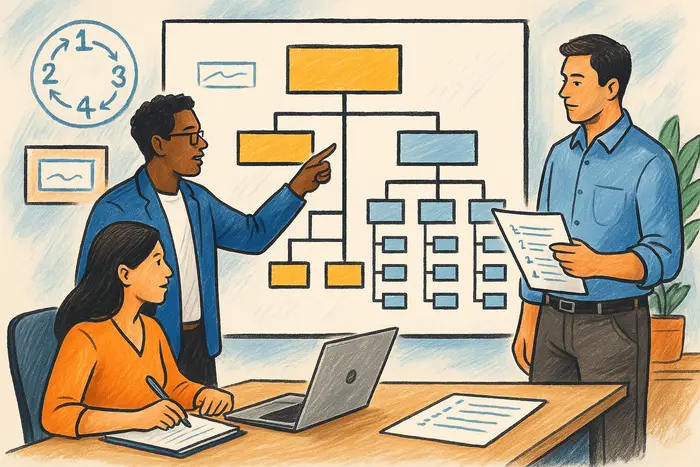
Work Breakdown Structure (WBS): Breaking Projects Into Manageable Chunks

Posts

Big projects can feel overwhelming—until you break them down.

That’s where the Work Breakdown Structure (WBS) comes in. It helps you divide large projects into smaller, more manageable parts that are easier to plan, assign, and track.

In this post, we’ll explore how to build and use a WBS to keep your projects organized, focused, and on track.

Read More

Project Charter Essentials: Aligning Everyone from Day One

Posts

Most project issues start with misalignment: unclear goals, fuzzy roles, or competing expectations.

A good project charter fixes that. It’s your alignment tool—the single document that outlines what you’re doing, why it matters, and how success will be measured.

In this post, we’ll break down the key elements of a strong project charter and show you how to write one that gets everyone on the same page from day one.

Read More

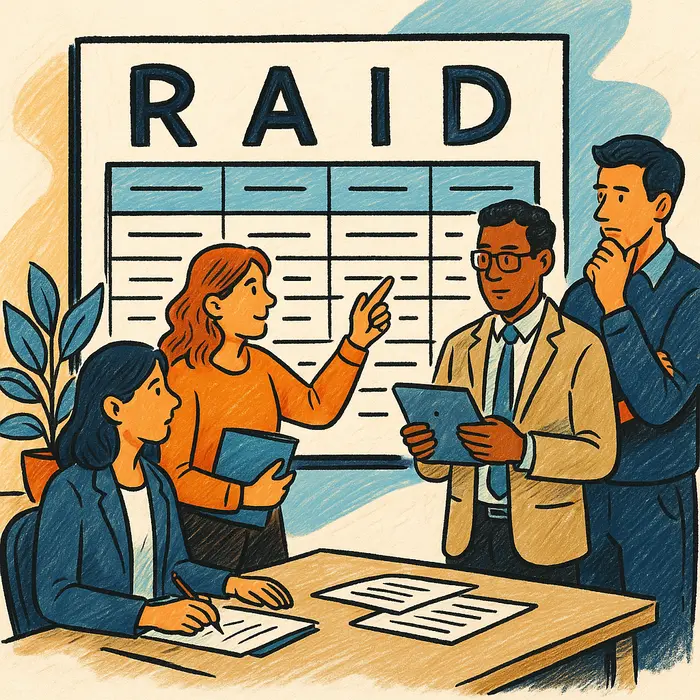
RAID Log: Managing Risks, Assumptions, Issues, and Dependencies

Posts

Managing a project without tracking its risks, assumptions, issues, and dependencies is like sailing without a compass. You may move fast—but you won’t stay on course.

That’s where a RAID log comes in.

It’s a simple yet powerful tool that helps you surface and track what could derail your project—before it happens.

Read More

Creating a Business Case with Real Impact

Posts

A well-written business case can be the difference between a great idea that gets funded—and one that dies in a folder.

But too often, business cases are vague, bloated, or too technical. To get real impact, your business case must be clear, credible, and compelling.

In this post, we’ll walk through how to create a business case that wins support and drives action.

Read More

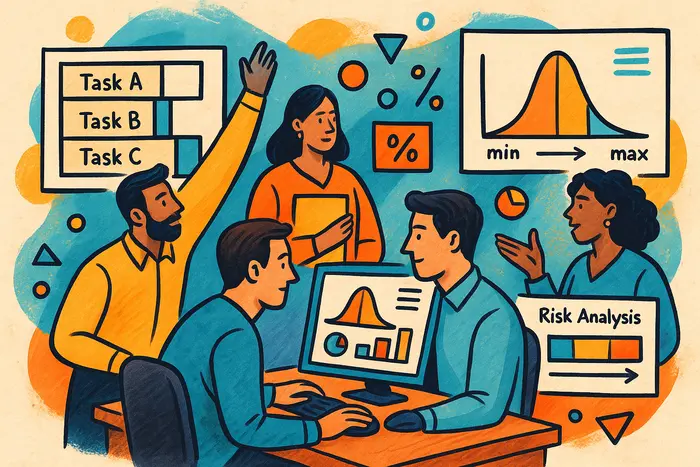
Monte Carlo Simulation for Project Risk

Posts

Project risk is everywhere. Budgets shift, timelines slip, scope grows.

Most project managers try to account for uncertainty using guesses or buffers. But there’s a better way: Monte Carlo simulation.

It’s a simple but powerful technique that helps you model uncertainty and make smarter decisions based on probability—not gut feel.

Read More

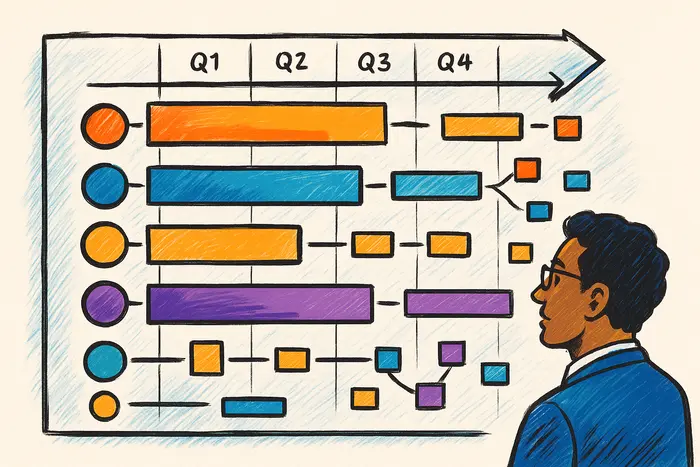
How to Build a High-Level Roadmap That Guides Execution

Posts

A high-level roadmap is more than a plan—it’s a shared direction. It shows your team (and stakeholders) what matters most, when to focus on it, and how all the moving parts fit together.

But too many roadmaps are either too vague or too detailed. The sweet spot? A roadmap that’s strategic enough to guide decisions and simple enough to stay usable.

Read More